



“Good design is obvious. Great design is transparent.” – Joe Sparano
Introduction: When Experience Matters More Than the Product
In today’s digital world, success doesn’t come to those with the “best” product, but to those who can turn that product into a memorable, seamless experience.
A user doesn’t simply use an app or website — they experience it.
And the moment something breaks that experience — a misplaced button, slow loading, confusing navigation — they leave, often for good.
UI UX design is not a stylistic luxury.
It is a strategic business advantage.
Behind every interface that works lies a project that understands its users, anticipates their behavior, and guides them without ever making them feel lost.
That is where digital success is defined.
UI and UX: Two Sides of the Same Journey
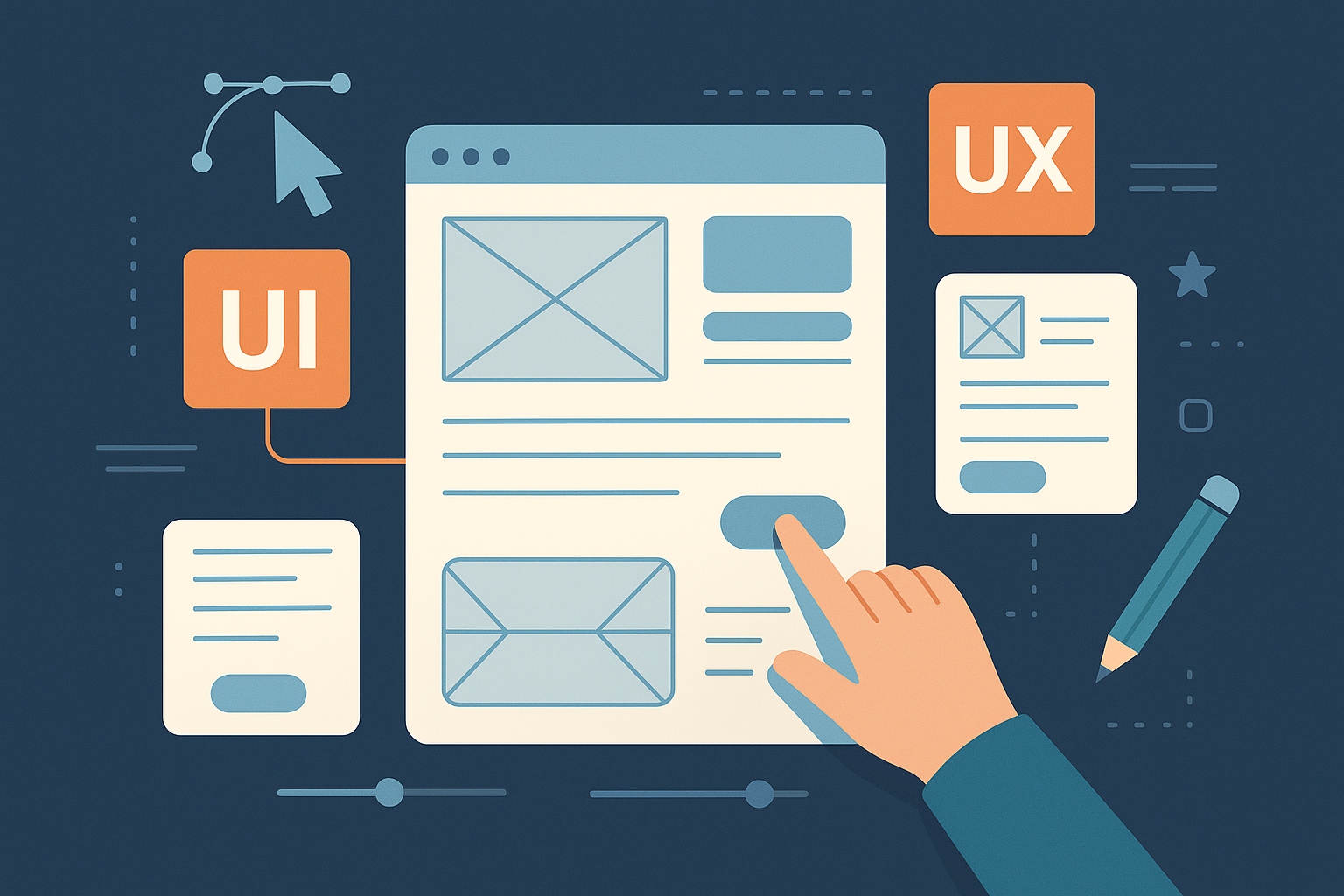
UI and UX are often used interchangeably, but they are two distinct (and complementary) pillars of any digital experience.
UI (User Interface): What the user sees
-
Colors
-
Typography
-
Buttons
-
Layout
It’s the visual identity of your product — the first impression that makes users say “wow”.
UX (User Experience): What the user lives
-
Paths
-
Logic
-
Interaction
-
Emotion
It’s the invisible structure that transforms complexity into simplicity.
Focusing only on UI creates a beautiful store… but you don’t know if the doors even open.
Focusing only on UX builds a perfect path… but forgets that humans are moved by emotion.
Only the union of aesthetic + function creates experiences that stick in the mind — and in the results.
From User Needs to Prototype: How Real Value Is Built
Good design doesn’t start with a creative spark.
It starts with a question:
“What does my user truly need?”
A winning approach always includes:
1. Research & analysis
Understanding what users look for, where they click, what stops them.
2. Wireframes & flows
Giving structure to the experience before adding colors.
3. Interactive prototyping
Testing, observing, adjusting.
4. Final design
Where everything takes visual and functional shape.
This iterative process creates products that evolve with users — not against them.
The Principles of Great UI UX Design: Simplicity, Consistency, Empathy
The best interfaces are the ones that don’t force you to think.
Behind that apparent simplicity lies a precise science.
Simplicity
Fewer clicks, more clarity.
Every element must have a purpose.
Consistency
The human brain loves patterns.
If a button is blue and bottom-right… it should always be blue and bottom-right.
Intuitive navigation
The path must reflect the user’s logic, not the designer’s.
Visual feedback
Every action deserves a reaction.
Even micro-interactions build trust.
Accessibility
Good design includes everyone.
When these principles align, the result isn’t just a refined interface — it’s a human, fluid, memorable experience.
Measuring What Users Feel: The Science Behind Experience
The brilliance of UX is that it can be measured.
Every scroll, click, and second on the page tells a story.
Key metrics include:
-
Conversion rate — how many users reach the goal
-
Time on page — a sign of comfort and interest
-
Drop-off points — where users quit
-
Direct feedback — sometimes you just need to ask
UX optimization is a continuous cycle: listen → analyze → improve.
Just like in a physical store, you observe customers, change the displays, and move the most desired items.
Success Stories: When Design Becomes an Accelerator
At Futurecap, we’ve seen the power of UX firsthand:
-
complex portals become accessible,
-
rigid management tools turn into enjoyable experiences,
-
websites become brands’ most profitable showcase.
The common thread is always the same:
put the user at the center and make them feel in control.
When the interface disappears and only the experience remains… that’s when design wins.
Conclusion: Experience Is the New Competitive Advantage
In 2025, design is no longer an aesthetic choice — it’s a digital survival strategy.
A website or app that doesn’t offer a smooth experience is abandoned within seconds.
Conversely, a product built with empathy, clarity and vision can foster loyalty for years.
UI UX design is what turns technology into emotion.
It’s what separates a “nice” project from a successful one.
Do you have a digital idea ready to take off?
Let’s talk.
Futurecap designs experiences that work — for your users and for your business.