




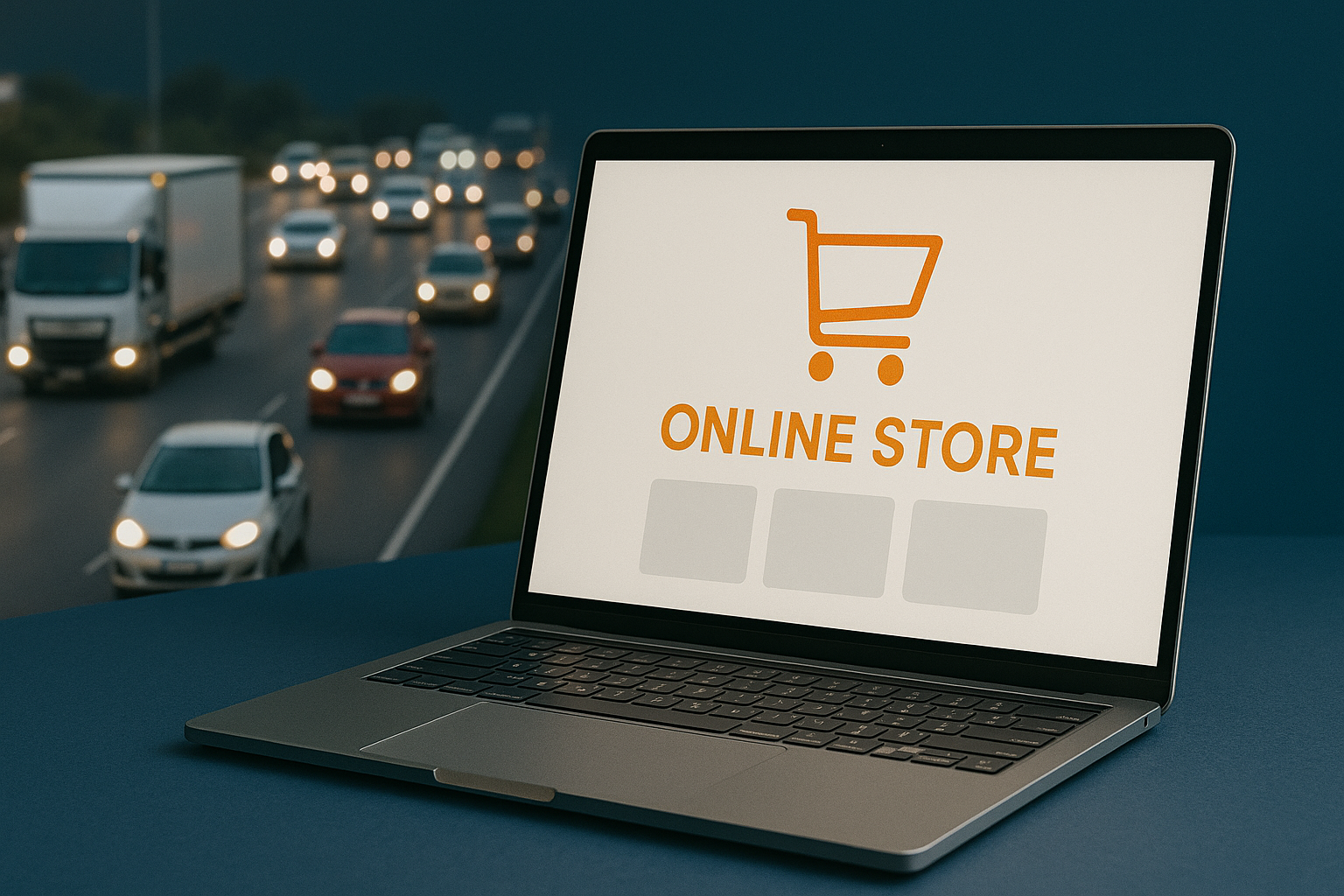
Launching an e-commerce isn’t just about putting a catalog online.
It means opening your new headquarters on the busiest street in the world: the Internet.
Here’s why your digital “location” means everything — and how to build a store where customers don’t just visit… they buy.
Here’s the address of your new store: www…
For generations, there’s been a golden rule — almost sacred — in the world of commerce:
the success of a business depends on three factors — location, location, and location.
Having your shop on the main street, with the highest pedestrian traffic, guaranteed visibility and, consequently, customers. That investment in rent or property was the most strategic move of all.
Today, however, the busiest street in the world has no cobblestones, no sidewalks.
It’s not in Milan, Rome, or New York.
It’s the Internet.
And your “address” on this endless street is your e-commerce website.
Many entrepreneurs, however, make a fatal mistake:
they think that just raising the digital shutter is enough for customers to come flooding in.
But just like in the physical world, opening a store in a dark, hidden alley, with an uninviting window and a rude clerk, leads nowhere.
Having an e-commerce site is not enough.
You need the right e-commerce, in the right digital location.
The 3 Mistakes That Turn Your E-commerce into an Empty Store
Why do so many online stores struggle to take off?
Why, even with great products, do the sales just not happen?
The answer often lies in three issues — the digital equivalent of choosing the worst possible spot for a physical store.
1. The Invisible Shop Window (The SEO Problem)
You can have the most beautiful store in the world — but if it’s on a street no one ever walks down, it’s useless.
On the web, that street is Google.
If your e-commerce isn’t built on a solid SEO (Search Engine Optimization) structure, you’re invisible to search engines.
Customers search for “comfortable hiking shoes” — and Google shows your competitors, while you stay hidden in a digital back alley.
Not being on the first page of Google is the modern equivalent of being in the outskirts without a signpost.
2. The Messy, Confusing Store (The User Experience Problem)
Imagine walking into a shop where products are piled up chaotically, prices are unreadable, and no one is there to help you. Would you stay? Probably not.
A confusing e-commerce — with illogical categories, poor-quality photos, or missing descriptions — creates the same frustration.
Users should find what they’re looking for in just a few clicks.
If not, they’ll feel lost… and leave — straight into the arms of a more “organized” competitor.
3. The Never-Ending Checkout Line (The Checkout Problem)
You did everything right. The customer entered, found a product they love, added it to their cart. They’re ready to pay.
And then — you make them wait.
They have to fill out 15 registration fields, the shipping fees appear only at the end (and are higher than expected), and their favorite payment method isn’t available.
It’s the perfect recipe for cart abandonment, the greatest enemy of every e-commerce.
A complicated checkout is like having a single, slow cashier during Black Friday.
The Solution: A Great Store Needs a Great Architect
A successful e-commerce isn’t a prepackaged product — it’s a strategic project, much like building a real store.
An experienced technology partner doesn’t just “put your products online.”
They act as both architect and digital interior designer:
-
Builds the foundations to be found: creates a fast, secure website with a strong SEO architecture, ensuring your “storefront” stands out on the main street of the Internet.
-
Designs a delightful shopping experience: organizes your store’s “interior layout” (UX) intuitively and attractively, guiding customers from entry to purchase across all devices — desktop or mobile.
-
Makes payment seamless, not painful: crafts a checkout that’s smooth, transparent, and secure, offering all the payment methods your customers expect.
Plus, it can integrate your e-commerce with your ERP, automating inventory and invoicing to save you hours of manual work.
Conclusion: Don’t Bring Customers to the Store — Bring the Store to the Customers
Your market is no longer just your city or your country — it’s the entire world.
But to conquer it, you can’t show up with a makeshift stand.
You need a flagship store, a digital destination that attracts customers and keeps them coming back.
Investing in a professional e-commerce means choosing the best possible location for your business.
It means building an asset that works for you 24/7 — turning clicks into loyal customers.
Ready to open your store on the world’s busiest street?
Let’s talk.
We’ll design your digital storefront and turn it into a success story.